The Ultimate Guide to surfing holidays in morocco
Updated guide with practical tips, best spots, and season-by-season advice for planning a surf trip
whether you’re a beginner looking for beach breaks or an experienced surfer hunting point breaks.
Why Morocco? A quick overview
Morocco is one of the world’s most reliable and varied surf destinations: an Atlantic coastline that delivers everything from forgiving beach break waves for learners to long, fast point breaks for experienced surfers. Its proximity to Europe, affordable surf camps, and a growing surf scene make it an easy, high-value trip whether you’ve got a few days or a full week.
-
- Who this guide is for: beginner to advanced surfers planning a surf trip, families looking for surf camps, and travelers who want a mix of waves, culture, and coast-side towns.
-
- What you’ll learn: best spots by region, when to go (season and months), how to get around (car vs. public transport), and practical safety and packing tips.
-
- How to use this guide: jump to “Best surf spots” for quick spot summaries, or read the season section if you need timing and swell info before you book.
Quick definitions to keep things clear:
-
- Point break: waves that peel along a headland or rock point, often long rides and great for intermediate to advanced surfers hunting a long wave.
-
- Beach break: waves that break over sand, usually good for beginners and students at surf schools because they’re more forgiving.
Across Morocco you’ll find fishing villages, surf towns, and cities that double as surf bases, each offers different vibes, from quiet sand shores to lively surf scenes with surf shops and evening markets. Read on for the regional breakdown and a practical roadmap to plan your surf trip.
Best surf spots on the Moroccan coast
Morocco’s coastline is packed with varied surf spots, everything from forgiving beach breaks ideal for beginners to long, world-class point breaks that attract experienced surfers. Below are the key regions and must-surf locations, with quick facts so you can pick the right spot for your level and trip plan.
Northern coast & Rif region
-
- Ras El Ma / Mediterranean fringe (entry-level)
-
- Level: beginner to intermediate.
-
- Type: beach breaks and small points.
-
- Best time: spring–autumn when Atlantic swells are smaller.
-
- Nearest town: coastal villages near Al Hoceima.
-
- Notes: gentle sand banks, good for lessons and longboard practice.
-
- Anchor point: famous point breaks near the north (long rides)
-
- Level: intermediate to advanced, Type: point breaks, Best time: winter swells produce long, peelable waves, Nearest town: small fishing village bases.
-
- Notes: expects stronger currents and set waves, bring a suitable board and local guidance.
Central Atlantic coast, Taghazout & Agadir
This is Morocco’s most famous surf stretch, with a string of spots that work across many swell sizes and winds.
-
- Anchor point / Anchor Point (Technical long right)
-
- Level: advanced, Type : point break, Best time: winter (big swells) but can work in shoulder months, Nearest town: Tamraght / Taghazout.
-
- Notes: one of the world-class points, expect long, fast waves.
-
- Local anchors and crowds can be heavy on good days.
-
- Hash Point (right point)
-
- Level: intermediate to advanced.
-
- Type: point break.
-
- Best time: autumn–winter.
-
- Nearest town: Taghazout.
-
- Notes: a benchmark for morocco surf, long rides on clean swell days.
-
- Panoramas & Crocodile Beach (series of beach breaks)
-
- Level: beginner to intermediate.
-
- Type: beach break.
-
- Best time: all year (smaller swells in summer).
-
- Nearest town: Taghazout, many camps nearby.
-
- Notes: perfect for lessons and board practice, sand bottom makes it forgiving.
-
- Devil’s Rock / Boilers (powerful reef/point)
-
- Level: advanced/expert,
-
- Type: reef/point
-
- Best time: big winter swells
-
- Nearest town: Tamraght/Taghazout.
-
- Notes: heavy waves and reef bottom only for experienced surfers with local knowledge.
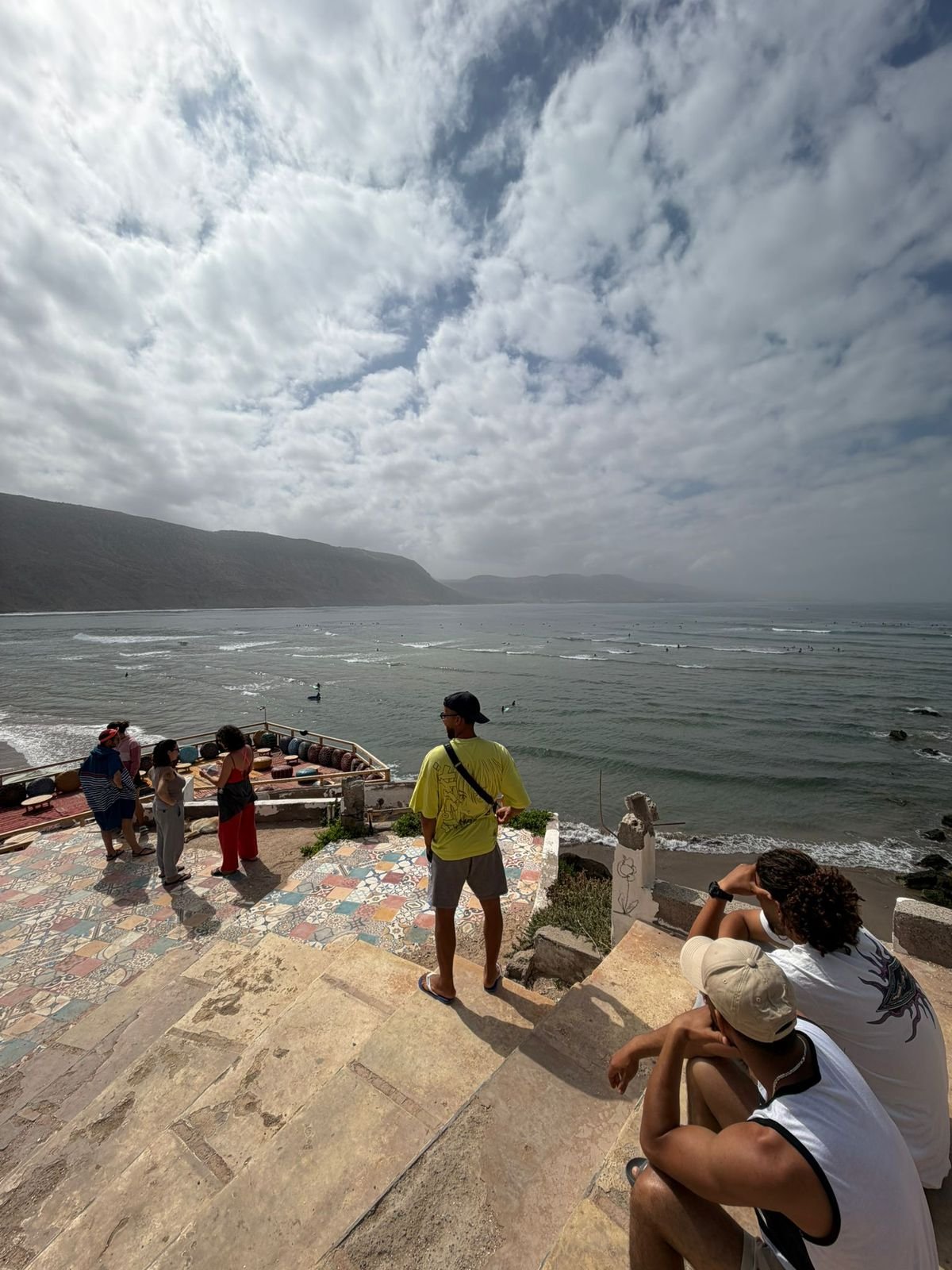
Imsouane long mellow right
-
- Imsouane Bay (longest rides)
-
- Level: beginner to advanced (multiple peaks).
-
- Type: point & beach mix.
-
- Best time: autumn–spring (works on many swells).
-
- Nearest town: Imsouane fishing village.
-
- Notes: famous for one of the longest right-hand waves in Morocco perfect for longboarders and cruisers. Multiple take-off zones mean options for different skill levels.
Southern coast & remote points
-
- Sidi Ifni & Mirleft area
-
- Level: beginner to advanced depending on spot.
-
- Type: reef and beach breaks.
-
- Best time: autumn–winter.
-
- Nearest towns: Sidi Ifni, Mirleft (small surf towns).
-
- Notes: less crowded; varied breaks including fun beach breaks and punchier reef points.
-
- Agadir outskirts (various beach breaks)
-
- Level: beginner to intermediate.
-
- Type: beach breaks.
-
- Best time: summer–autumn for smaller waves.
-
- Nearest city: Agadir.
-
- Notes: accessible from city bases and surf camps, good for students and families.
3–5 must surf spots (compare & choose)
-
- Anchor Point (Taghazout) : world-class rights for advanced surfers, choose this for long, hollow rides on consistent Atlantic swells.
-
- Imsouane : the place for mellow, long rides and longboarding, great if you want a relaxed town and long waves.
-
- Panoramas / Crocodile Beach : best for beginners and surf lessons, soft waves and lots of surf camps nearby.
-
- Sidi Ifni / Mirleft : quieter reef and point options, choose this if you want fewer crowds and varied terrain.
-
- Devil’s Rock / Boilers : for experienced surfers chasing power and performance on reef points in winter swells.
How to pick the right spot for your trip
-
- Beginners: look for beach breaks and surf schools, Panoramas, Crocodile Beach, and parts of Agadir are ideal.
-
- Intermediates: aim for Imsouane or the more protected points in Taghazout to work on longer rides.
-
- Advanced surfers: target Anchor Point, Boilers, and exposed reef points during winter swells for performance surfing.
-
- Trip length: a week lets you explore 2–3 spots along the coast; a few days work for a single-spot camp or lessons.
Notes on access & logistics: many top spots have nearby surf camps, rental boards, and surf schools, some remote points require a car for access and careful parking.
Always check local tide and swell info before paddling out, and respect local lineups and village communities.
When to go: seasons, swell & conditions
Timing a Morocco surf trip comes down to understanding winter swells, summer lulls, and the shoulder months when conditions can be most consistent for your level.
Below is a practical, season-by-season breakdown, followed by planning tips for trip length, tides, and wind so you can pick the best time for your goals.
High season, winter (November to March)
-
- Why go: Atlantic winter swells deliver the most powerful and consistent waves on the Moroccan coast, perfect for point breaks and exposed reef breaks.
-
- Typical conditions: larger swell sizes (often head-high and above on bigger days), more frequent west-to-northwest swells, and variable wind (onshore winds can happen but many days offer offshore morning winds).
-
- Best spots: Anchor Point, Boilers, exposed reef points and the best point breaks along the central coast.
-
- Who it’s for: intermediate to advanced surfers chasing performance waves, expect more crowded lineups at the most famous points.
Shoulder months, autumn & spring (September–November, March, May)
-
- Why go: these months often combine reliable swells with milder weather and lighter crowds, ideal if you want a balance of good waves and easier travel.
-
- Typical conditions: moderate swell sizes that still feed point breaks, calmer winds at times, and more glassy mornings. Beach breaks and protected points often work well.
-
- Best spots: Imsouane, Taghazout-area points and many beach breaks that are forgiving for mixed-ability groups.
-
- Who it’s for: intermediates and mixed-ability groups, great for a week-long trip to sample multiple spots.
Summer, low season (June to August)
-
- Why go: warmer water and calmer winds make summer attractive for learners and families, though swells are smaller and less consistent.
-
- Typical conditions: smaller swells, more glassy conditions on protected spots early in the morning, and onshore seabreezes later in the day.
-
- Best spots: protected beach breaks and sheltered points, many surf camps run lessons and courses tailored to beginners.
-
- Who it’s for: beginners, longboarders, and travelers who prefer warmer water and sunny weather over big waves.
How swells, wind & tides affect different break types
-
- Point breaks: work best with consistent groundswells from the west–northwest, they often improve on a medium–large swell and prefer cleaner offshore winds, they can be surfed in winter and shoulder months.
-
- Reef breaks: powerful and hollow on bigger winter swells, require local knowledge about currents and tide windows to avoid hazards.
-
- Beach breaks: more forgiving and respond to smaller swells, great for lessons and flexible across seasons, sand banks change with storms so conditions can vary.
-
- Tides: some spots (especially reefs and points) have preferred tide windows, check local spot notes before planning a session.
Expected swell & wave sizes by season (quick guide)
-
- Winter: frequent swells, small to large (should expect consistent head-high to overhead sets on exposed points).
-
- Shoulder months: medium swells, often the best compromise for long rides and cleaner conditions.
-
- Summer: smaller, less consistent swells, ideal for beach breaks and beginners.
Trip planning: how long to stay
-
- 3 days: great for a focused session at one spot or a single surf camp experience (good for quick weekend trips).
-
- 7 days / one week: optimal, gives you time to chase the best days, try 2–3 spots (for example Taghazout + Imsouane), and recover between sessions.
-
- 10+ days: recommended for explorers who want to drive between towns, sample remote points and build in rest days when the swell is onshore.
Practical forecasting tips
-
- Use reliable surf forecast services to monitor swell size, direction and period, prioritize days with longer swell period for cleaner, more powerful waves.
-
- Watch the wind: mornings are usually calmer and more offshore, afternoons often see seabreeze onshore, especially in summer.
-
- Always check tide windows for reef and point breaks, some waves only work on mid to high tide, others on low.
Safety & realistic expectations
-
- Winter swells can produce powerful sets and strong currents, if you’re not comfortable in bigger surf, choose a sheltered beach break or take lessons at a surf camp.
-
- Respect local lineups and ask locals or instructors about hazards like rocks, reefs and rips before paddling out.
Summary: pick winter for serious wave-hunting at point breaks and reefs, shoulder months for the best blend of swell and weather, and summer for warmer water and beginner-friendly beach breaks. Plan a week if you can that gives you the best chance to catch clean swell windows and explore multiple spots along the coast.
Where to stay, camps & getting around
Choosing the right base makes a big difference to your surf trip: pick a surf town with easy access to the spots you want to ride, or stay in a quieter fishing village if you prefer fewer crowds.
Below are recommended base towns, campsite-style surf camps, transport options, and two sample itineraries to help plan your trip.
Best base towns & villages by region
-
- Taghazout (central coast) : the busiest surf town with the widest range of surf camps, rental boards, and restaurants, great launch point for Anchor Point, Hash Point and nearby beach breaks.
-
- Tamraght : just south of Taghazout, smaller village vibe with easy access to many point breaks and a cluster of mid-range camps.
-
- Imsouane (fishing village) : a chilled fishing village with one of Morocco’s longest right-hand waves, choose this for relaxed evenings and longboarding-friendly waves.
-
- Sidi Ifni / Mirleft (southern coast) : quieter towns with varied reef and beach breaks and fewer crowds, good if you want to explore multiple uncrowded spots by car.
-
- Agadir (city) : the regional hub with the biggest selection of services and easier international connections, best for families and travelers who want city comforts plus beach breaks nearby.
Surf camps, what to expect
Surf camps in Morocco typically bundle accommodation, daily surf lessons or guiding, board storage, and transfers to spots.
Levels range from beginner-focused camps to performance-oriented weeks for advanced surfers.
-
- Beginner / family camps: focus on lessons at gentle beach breaks, offer equipment rental, and often include meals, ideal in summer or shoulder months.
-
- All-levels camps: run guided sessions that move between protected beaches and easier points depending on conditions, common around Taghazout and Imsouane.
-
- Performance camps: smaller groups, specific coaching, and access to more challenging point and reef breaks, plan these for winter or shoulder months when swells are more consistent.
Getting around: car vs public transport
-
- Renting a car: gives the most freedom to chase swells and access remote points (recommended if you want to visit multiple spots in one trip). Roads on the main coastline are generally good, but expect narrower routes near small villages and some unpaved access roads to points.
-
- Public transport: buses and shared taxis connect major towns and cities (Agadir ⇄ Taghazout ⇄ Imsouane), but last-mile access to remote spots is limited, you’ll likely need local transfers or a camp shuttle.
-
- Local transfers & taxis: many camps include daily pick-ups for sessions, arrange transfers in advance, especially during high season or for early-morning pickups.
Practical tips & checklists
-
- Packing: bring a 3/2mm or 4/3mm wetsuit for winter/shoulder months and a spring suit or trunks for summer, leash, wax, travel-friendly board bag, and reef booties if you plan to surf reefs.
-
- Money & logistics: cash is handy in small towns and fishing villages, ATMs are available in larger towns and cities but may be sparse in remote areas.
-
- Board rentals: widely available in Taghazout and Imsouane, book in advance in peak winter season to secure performance boards.
-
- Respect local communities: many spots are adjacent to small villages, park considerately, keep noise low, and ask permission before photographing locals or private property.
Sample itineraries
7-day (one-week) surf trip, balanced
-
- Days 1–3: Base in Tamraght, morning sessions at Panoramas and Crocodile Beach, lessons or guided surf clinics.
-
- Days 4–5: Move to Imsouane (fishing village), long right sessions, relax in the village, try local seafood.
-
- Days 6–7: Return to Taghazout for an Anchor Point session (if conditions allow) and a final surf lesson or chill day.
10-day road trip, explore & chase swells
-
- Days 1–2: Arrive Agadir, pick up rental car, check local forecasts.
-
- Days 3–5: Taghazout/Tamraght camps and points, focused performance or guided days.
-
- Days 6–7: Imsouane, long rides and relaxed town vibe.
-
- Days 8–10: Drive south to Sidi Ifni / Mirleft, explore reef and beach breaks, end with a beach day in Agadir before departure.
Accessibility & traveler notes
-
- Families & beginners: choose camps in Tamraght, Agadir or Imsouane with lesson packages and safe beach breaks.
-
- Solo travelers: camps are a great way to meet other surfers; many are accustomed to single travelers and offer shared rooms or single-room upgrades.
-
- Remote spots: expect fewer amenities in small fishing villages, bring basic supplies and plan car access if you want to explore these places.
Ready to book? Check availability at our surf house, or compare car hire options from Agadir to give yourself the freedom to chase the best waves during your trip.
Surfing tips, safety & local vibe
Whether you’re paddling out at Anchor Point or a mellow beach break, practical preparation and respect for the local lineup make every session better. Below are concise, actionable tips for reading breaks, choosing the right board, staying safe, and blending into the local surf vibe and scene.
Quick safety checklist (read this before every session)
-
- Check conditions: look at swell size, swell direction, wind and tide, these change how each place breaks.
-
- Assess hazards: note rocks, reefs and rips before paddling out, ask locals or your camp about any hidden hazards.
-
- Choose the right spot: pick a beach break for beginners, a protected point for intermediates, and a reef or exposed point only if you’re experienced.
-
- Buddy up: surf with others when possible, remote points and winter sessions are riskier alone.
Reading the break & etiquette
-
- Watch the lineup for 5–10 minutes to see where waves stand up, how sets move, and where locals take off.
-
- Respect local surfers: don’t drop in, wait your turn, and communicate, a polite approach goes a long way in small towns and fishing villages.
-
- Anchor Point and famous points often have established lineups, follow the local way of rotating and priority.
Board choice & equipment
-
- Beginners: a larger, stable board or foam board works best at beach breaks and learning zones.
-
- Intermediates: a mid-length or hybrid is ideal for long rides at Imsouane or protected points.
-
- Advanced: performance shortboards for Anchor Point, Boilers and reef points during winter swells.
-
- Wetsuit & extras: a 3/2mm or 4/3mm suit for winter/shoulder months, spring suit or trunks in summer; leash, reef booties for sharp bottoms, and a good travel board bag for flights.
How to handle reefs, points & beach breaks
-
- Reef: enter and exit carefully at designated channels; reef breaks can be shallow and sharp, check tide windows and wear booties if needed.
-
- Points: paddle wide to avoid the take-off zone, and be mindful of long, fast waves that can run close to rocks.
-
- Beach breaks: watch for shifting sand banks and changing peaks, they can get better or worse after storms.
Local vibe & surf scene snapshots
-
- Taghazout & Tamraght: lively surf towns with a mix of international and local surfers, plenty of camps, surf shops and an upbeat evening vibe.
-
- Imsouane (fishing village): relaxed place where surfers and locals coexist, long mellow rides, simple cafes and an easygoing pace.
-
- Sidi Ifni / Mirleft: quieter surf spots and a more local feel, respect village routines, and you’ll be welcomed.
Mini FAQ
-
- Q: Is it crowded? A: Popular points fill on good winter days, early mornings and shoulder months are less crowded.
-
- Q: Can I rent a board? A: Yes, Taghazout, Imsouane and Agadir have numerous rental shops and camps with boards for all levels.
-
- Q: What about sharks? A: Shark encounters are extremely rare, focus on common hazards like rips, reefs and crowded lineups.
Final note: be humble, surf smart, and support local camps and businesses. The best way to enjoy Morocco’s waves is to leave the place better than you found it, respect the water, the people, and the vibe, and you’ll get the most out of this world-class surf destination.
Conclusion & next steps
Morocco is a world-class surf place with something for everyone: powerful winter point breaks for experienced surfers, long mellow rights for longboarders, and forgiving beach breaks for learners. Use this guide to match your season, spot and trip length to your level, and plan at least a week if you can to give yourself the best chance of scoring clean waves.
-
- Key takeaways : Best season: winter for big swells and point breaks; shoulder months for a balance of waves and weather, summer for warm-water, beginner-friendly beach breaks.
-
- Top spots: Anchor Point (Taghazout) for advanced rights, Imsouane for long rides, Panoramas/Crocodile Beach for beginners, and Sidi Ifni/Mirleft for quieter reef and point options.
-
- Logistics: base in Taghazout, Imsouane or Agadir depending on vibe, rent a car to chase swells or rely on camps’ transfers if you prefer not to drive.
-
- Recommended short itinerary: 7-day sample, 3 days Taghazout/Tamraght (beach breaks & an Anchor Point check), 2 days Imsouane (long rights), 2 days Sidi Ifni/Mirleft or Agadir for exploration and easy departures.
-
- Safety & local vibe: respect local surfers, check tides and hazards, and choose your spot to match skill level, local camps and guides are invaluable for unfamiliar points.
Next steps:
-
- Decide the season that suits your goals and check surf forecasts for your travel dates.
-
- Book a surf camp or accommodations in your chosen base town, camps can handle transfers, lessons and board rentals.
-
- Arrange transport (car hire from Agadir or airport transfers) and pack the right board and wetsuit for the season.
Want more help planning your trip? Browse the spot guides above to pick the exact spots you want to surf, or subscribe for updated forecasts, camp recommendations and itinerary templates tailored to your preferred time and level.
 English
  French
  Italian
  German
  Spanish